
Ipe is the premium benchmark for wood decking. It is dense, naturally resistant to rot and insects, and runs roughly $15–28 per sq ft in material compared with $29–31 for Craft-Bilt aluminum. Ipe’s trade-offs are upkeep and handling: it needs regular oiling to hold its colour, is heavy and difficult to cut and fasten, and remains a combustible natural product. Aluminum costs somewhat more upfront but needs no oiling, no sanding and no sealing, ever.
Pricing basis: wood range of $15–28/sq ft reflects Ipe, the recognized premium benchmark among wood decking species. Material cost only; Ipe installation labour is typically higher than for softwood because of the density of the boards.

Aluminum Deck Boards
Aluminum vs Premium Ipe Hardwood at a Glance
| Factor | Aluminum (Craft-Bilt) | Ipe Hardwood |
|---|---|---|
| Material cost (per sq ft, CAD) | $29–31 | $15–28 |
| Lifespan | Built to last the life of the structure | Long-lived with proper care; commonly cited at 40+ years, with some sources citing up to 75 years in ideal conditions |
| Maintenance | Soap-and-water wash only | Regular oiling to keep colour; unoiled boards weather to a silver-grey |
| Rot and insects | Immune | Naturally resistant, though still a natural material |
| Wet-surface traction | Non-skid texture embedded in the finish | Smooth boards can be slippery when wet |
| Installation | Cut with a carbide blade; straightforward for DIYers | Very hard and dense; pre-drilling and specialized fasteners needed |
| Fire safety | Non-combustible | Combustible; many Ipe products carry a Class A fire rating, the highest rating available to a combustible material |
Cost: Ipe Can Still Be Lower Upfront
At $15–28 per sq ft, Ipe’s range sits below aluminum’s $29–31 and overlaps at the top end. Material price alone will not favour aluminum, so the comparison rests on installation effort, ongoing maintenance and long-term performance.
Material cost is only part of the picture. Ipe typically costs more to install than softwood because of the density of the boards, and that labour difference narrows the upfront gap further once a full project is priced out.
Lifespan and Durability
Ipe earns its reputation here: a well-built Ipe deck commonly lasts 40 years or more, and some sources cite up to 75 years in ideal conditions, among the longest-lived decking materials available. It will not rot or sag under normal use, and its density is part of what makes it so durable. Aluminum takes a different path to longevity: rather than relying on natural density, Craft-Bilt decking is engineered to last the life of the structure it’s attached to, and is backed by a limited lifetime warranty for the original owner against structural defects, cracking, peeling and rusting. Ipe’s warranties, where offered, typically come from the installer rather than the wood itself.
Maintenance Over Time
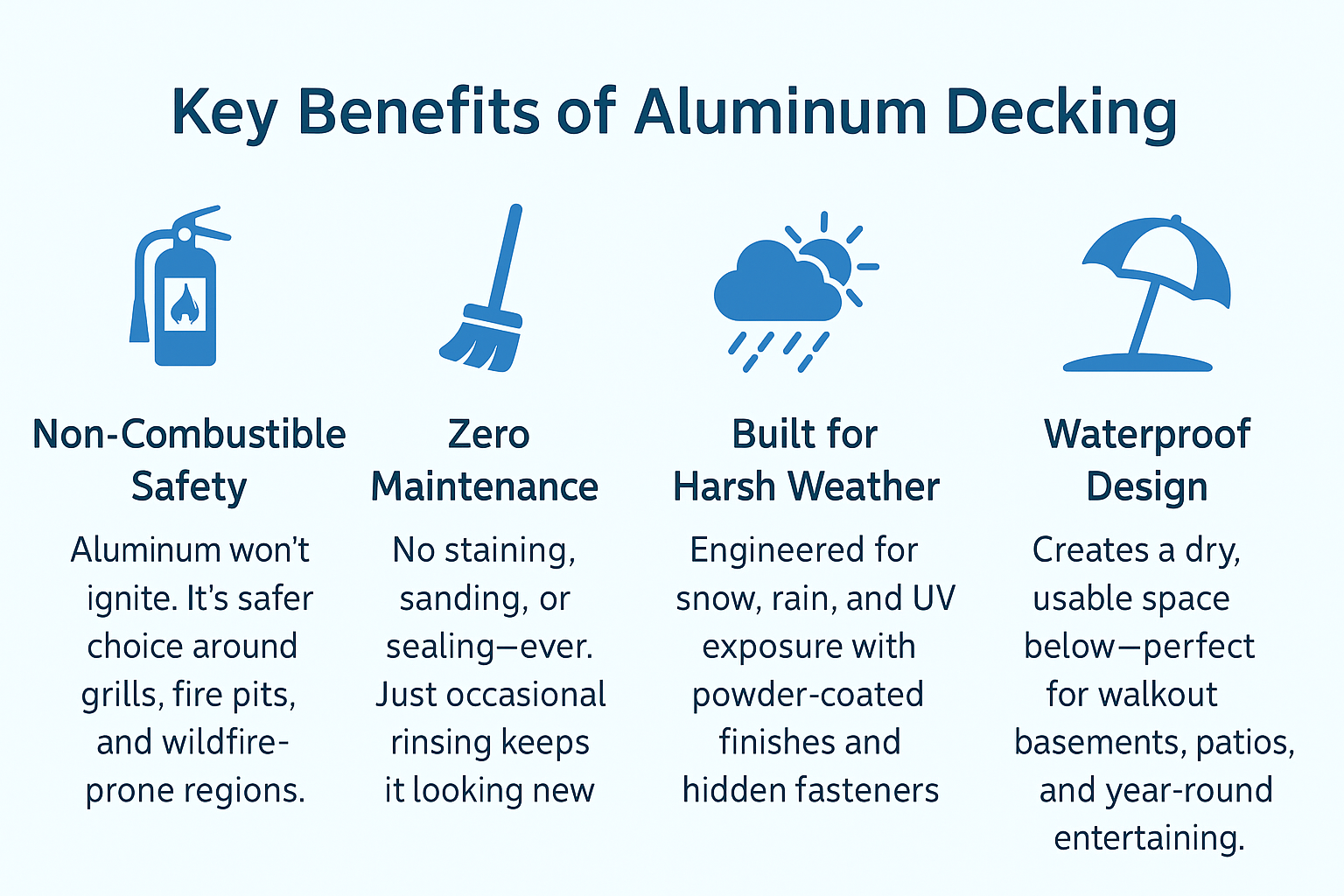
Ipe holds up well, but keeping its rich colour requires periodic oiling, and neglected boards weather to a silver-grey. That is a matter of preference as much as performance, but it is ongoing work. Aluminum needs only an occasional wash.
Installation and Handling
Ipe is extremely dense and heavy. Boards usually need pre-drilling, and cutting is hard on blades, which tends to raise labour cost. Aluminum boards are lighter and install with standard power tools fitted with a carbide-tipped blade.
Traction and Safety
Smooth hardwood boards can be slippery after rain or snowmelt. Aluminum decking’s non-skid texture is embedded in the finish and maintains traction wet or dry. On fire safety, Ipe’s density gives it a genuine edge over most wood species, many Ipe products are certified to a Class A fire rating, the best rating a combustible material can achieve. Aluminum goes a step further: it is non-combustible outright, which matters most in wildfire-prone regions and for homeowners who want to rule fire risk out entirely rather than minimize it.
Frequently Asked Questions
Is Ipe cheaper than aluminum decking?
Often, in material cost. Ipe runs roughly $15–28 per sq ft compared with $29–31 for aluminum, though Ipe typically costs more to install and needs regular oiling to keep its colour.
Does aluminum decking need to be oiled or sealed like Ipe?
No. Aluminum decking never needs oiling, staining, sealing or sanding. A wash with soap and water is all that’s required.
Is Ipe decking slippery when wet?
Smooth hardwood boards can be slippery after rain or snowmelt. Aluminum decking has a non-skid texture embedded in its finish for consistent traction.
Which is easier to install, Ipe or aluminum decking?
Aluminum. Ipe is very dense and generally requires pre-drilling and specialized fasteners, while aluminum boards are cut to length with a carbide-tipped blade and screwed to the joists.
How long does an Ipe deck last compared to aluminum?
Ipe is genuinely long-lived, commonly cited at 40 years or more, with some sources citing up to 75 years in ideal conditions. Craft-Bilt aluminum decking is engineered to last the life of the structure it’s attached to, backed by a limited lifetime warranty for the original owner against structural defects, cracking, peeling and rusting.
Planning a new deck? Explore Craft-Bilt aluminum decking or find a dealer near you.